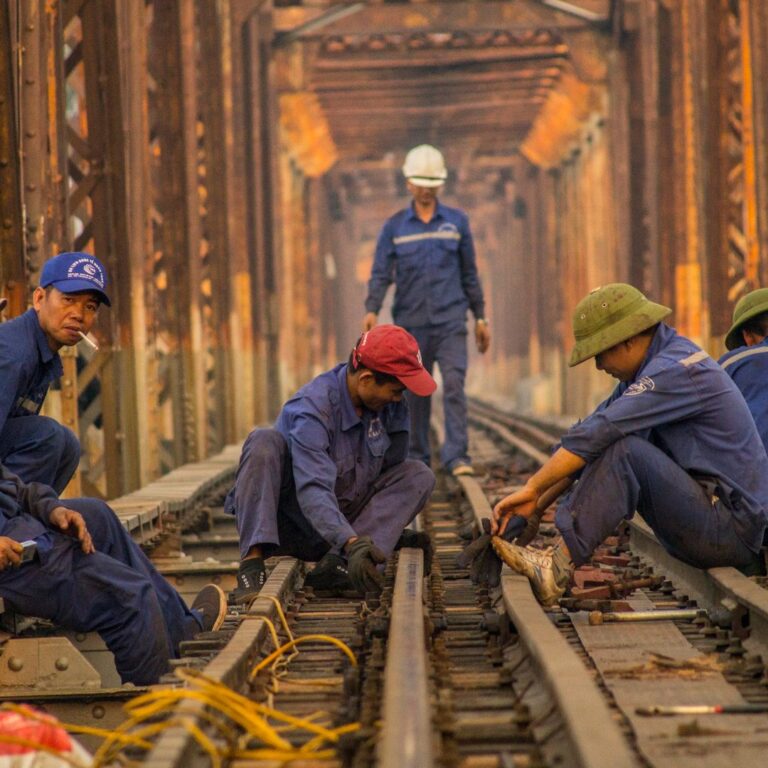
Implementing Foreign Worker Safety Training in Korea for Employer Compliance

Implementing effective Foreign worker safety training Korea is a foundational responsibility for employers. This critical aspect of Global Recruitment ensures the well-being of international employees and upholds statutory compliance within the Republic of Korea.


Navigating South Korea E-9 Quota Changes and Hiring Mandates for Corporate Sponsors

Navigating South Korea E-9 Quota Changes and Hiring Mandates for Corporate Sponsors

South Korea E-9 quota changes and hiring strategies require immediate operational adjustments as manufacturing, agriculture, and construction sectors face persistent domestic labor shortages. Manufacturing enterprises and service sector operators frequently rely on non-professional employment permits to sustain baseline operational capacity across regional facilities.

Structuring Cultural Orientation for Foreign Employees in Korea to Improve Retention

Cultural orientation for foreign employees in Korea serves as a foundational step in mitigating turnover and fostering long-term workplace productivity. Employers who invest in structured adjustment programs often report smoother integration for international staff arriving in a new professional landscape.

Stabilizing International Workforce Retention Through Structured Sponsorship and Compliance

Addressing foreign worker turnover Korea requires a transition from reactive staffing to a proactive, compliance-driven integration model. Many domestic firms experience high attrition rates because they overlook the correlation between rigorous visa sponsorship workflows and long-term employee engagement. By refining …

Read more

Implementing Rolling Recruitment Strategies for Consistent Global Talent Pipelines in Korea

Implementing Rolling Recruitment Strategies for Consistent Global Talent Pipelines in Korea

Rolling recruitment strategies Korea provide a framework for organizations to maintain a steady flow of qualified personnel rather than relying on episodic, high-volume hiring campaigns. By adopting an evergreen approach to talent acquisition, firms minimize the disruptions caused by long lead times inherent in international visa processing and background verification.

Strategies for Addressing the Skilled Foreign Workers Korea Shortage Through Compliant Recruitment

Strategies for Addressing the Skilled Foreign Workers Korea Shortage Through Compliant Recruitment

The skilled foreign workers Korea shortage presents a measurable challenge for domestic industries requiring specialized technical expertise. As the national labor market evolves, firms must adopt precise recruitment strategies to integrate international professionals effectively into their existing operational frameworks.

Navigating South Korea E-9 Quota Changes and Hiring Obligations for Employers

Navigating South Korea E-9 Quota Changes and Hiring Obligations for Employers

South Korea E-9 quota changes and hiring adjustments require corporate human resources teams to re-evaluate their staffing models across manufacturing, agriculture, and service sectors. Domestic enterprises facing labor shortages often look toward regulated international channels to fill operational gaps safely.

Employer Obligations for Korea Social Security Foreign Employees and Insurance Enrollment

Employer Obligations for Korea Social Security Foreign Employees and Insurance Enrollment

Employer Obligations for Korea Social Security Foreign Employees and Insurance Enrollment Managing the payroll and statutory benefits for Korea social security foreign employees requires a clear understanding of the National Pension Service and the principle of reciprocity. Employers in Korea …

Read more

Managing Foreign Employee Tax Obligations in Korea Through Compliant Payroll Systems

Managing Foreign Employee Tax Obligations in Korea Through Compliant Payroll Systems

Navigating foreign employee tax obligations Korea requires structured coordination between corporate human resources departments and local tax authorities. Organizations expanding their operations across borders must align internal payroll frameworks with national statutory requirements to avoid financial penalties. Ensuring accurate withholding calculations protects both the corporate entity and the individual worker from unexpected liabilities during annual tax settlement periods.

Managing Industrial Workforce Scaling Through South Korea E-9 Quota Changes and Hiring

Recent South Korea E-9 quota changes and Hiring adjustments reflect a broader government initiative to address acute labor shortages in the manufacturing, construction, and agricultural sectors. As the Ministry of Employment and Labor (MOEL) modifies the total volume of available permits for non-professional labor, businesses must recalibrate their long-term staffing projections.